For instance, substances with ionic bonds tend to have high melting and boiling points, while those with covalent bonds typically have lower melting and boiling points. This is because ionic bonds are stronger than covalent bonds and require more energy to break. However, there are exceptions to this rule, and other factors such as molecular structure can influence these properties.
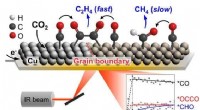
To accurately determine the type of bond in a substance, experimental techniques such as X-ray crystallography, nuclear magnetic resonance (NMR) spectroscopy, or infrared (IR) spectroscopy are commonly employed. These techniques provide detailed information about the arrangement of atoms and the types of bonds present in a substance.