1. Salt dissolved in water: This is a solution. Salt completely dissolves in water, forming a homogeneous mixture where the salt particles are evenly distributed throughout the water.
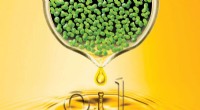
2. Oil and water: This is not a solution. Oil and water are immiscible (do not mix), forming two distinct layers. They do not form a homogeneous mixture.
3. Sugar dissolved in tea: This is a solution. Sugar completely dissolves in tea, forming a homogeneous mixture where the sugar particles are evenly distributed throughout the tea.
4. Sand and water: This is not a solution. Sand particles do not dissolve in water and settle at the bottom, forming a heterogeneous mixture.
5. Alcohol and water: This is a solution. Alcohol and water are completely miscible and form a homogeneous mixture.
Therefore, based on the given options, the mixture that is most likely a solution is salt dissolved in water.