Sodium: Sodium is a soft, silvery-white metal that is highly reactive. It is the sixth most abundant element in the Earth's crust. Sodium is so reactive that it must be stored in a dry environment, because it reacts with water to form sodium hydroxide (NaOH) and hydrogen gas (H2). Sodium is also a very good conductor of electricity and heat.
Chlorine: Chlorine is a greenish-yellow gas that is also highly reactive. It is the second most abundant element in the Earth's crust. Chlorine is used in a variety of applications, including water purification, bleaching, and the production of PVC pipes. Chlorine is also a very toxic gas, and can cause respiratory problems if inhaled.
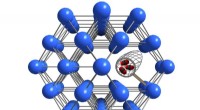
Sodium Chloride: Sodium chloride, also known as table salt, is a white, crystalline compound that is formed when sodium and chlorine atoms react with each other. Sodium chloride is an ionic compound, meaning that the sodium atoms lose an electron to the chlorine atoms, resulting in a positive sodium ion (Na+) and a negative chloride ion (Cl-). These ions are then attracted to each other, forming a stable crystal lattice structure.
Sodium chloride is a very different substance from either sodium or chlorine. It is a hard, brittle solid that is not very reactive. Sodium chloride is soluble in water, and its solution conducts electricity. Sodium chloride is also an essential nutrient for humans and many other animals.
The different properties of sodium chloride are due to the way in which the sodium and chlorine atoms are bonded together. In sodium chloride, the atoms are bonded together by ionic bonds, which are very strong. This is why sodium chloride is a hard, brittle solid that is not very reactive. In contrast, the sodium and chlorine atoms in sodium and chlorine gas are bonded together by covalent bonds, which are weaker. This is why sodium and chlorine gas are both soft, reactive substances.
The properties of sodium chloride are also different from the properties of its constituent elements because of the way in which the ions are arranged in the crystal lattice structure. In sodium chloride, the ions are arranged in a regular, repeating pattern. This is what gives sodium chloride its characteristic cubic shape. The regular arrangement of the ions also makes sodium chloride a very good conductor of electricity.