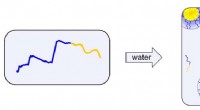
In a solution, the components are also evenly distributed throughout the mixture, but they are chemically combined. The composition of a solution is constant throughout, and the properties of the solution are determined by the properties of the components. Examples of solutions include sugar water, alcohol, and vinegar.
The main difference between a homogeneous mixture and a solution is that the components of a solution are chemically combined, while the components of a homogeneous mixture are not. This difference can have a significant impact on the properties of the mixture. For example, solutions are typically more stable than homogeneous mixtures, and they can conduct electricity, while homogeneous mixtures cannot.