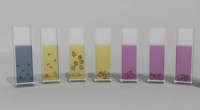
For example, the indicator phenolphthalein is colorless in acidic solutions and pink in basic solutions. This is because the H+ ions donated by the acid protonate the phenolphthalein molecule, which changes its chemical structure and causes it to absorb light in the visible spectrum.
The color change of an indicator can be used to determine the pH of a solution. This is because each indicator has a specific pH range over which it changes color. By comparing the color of the indicator to a color chart, you can determine the pH of the solution.
Indicators are an important tool in chemistry because they allow us to easily and quickly determine the pH of a solution. This information can be used to control the pH of a solution for a variety of purposes, such as in the food industry, the pharmaceutical industry, and the water treatment industry.