Pb(NO3)2 (aq) + K2SO4 (aq) → PbSO4 (s) + 2KNO3 (aq)
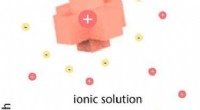
In this reaction, lead nitrate and potassium sulfate are dissolved in water (indicated by the "(aq)" notation). When these solutions are mixed, lead sulfate forms as a solid precipitate (indicated by the "(s)" notation), while potassium nitrate remains dissolved in the solution (indicated by the "(aq)" notation).
The reaction occurs because lead sulfate is less soluble in water compared to lead nitrate and potassium sulfate. As a result, when the two solutions are mixed, lead sulfate precipitates out of the solution, while potassium nitrate remains dissolved.
This reaction is an example of a precipitation reaction, which is a type of chemical reaction in which two solutions containing soluble ionic compounds are mixed, resulting in the formation of an insoluble compound that precipitates out of the solution.