Here's what happens when a liquid reaches its boiling point:
- At the given temperature and pressure, the liquid and its vapour are in equilibrium, meaning they both can co-exist.
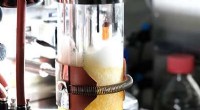
- Vapour bubbles form inside the liquid due to rapid vaporization. These bubbles, composed of the vapour state of the liquid, grow larger and rise to the surface.
- On the liquid's surface, the expanding vapour bubbles burst, releasing vapour into the atmosphere. This release of vapour creates the appearance of boiling and bubbling.
- As more vapour is released, more bubbles form and rise, continuously producing steam or vapour.
It's important to note that the boiling point of a liquid depends on several factors, including atmospheric pressure, altitude, and impurities present in the liquid. In general, a liquid boils at a higher temperature as the surrounding pressure increases and lower pressure leads to lower boiling points.