Water is a polar molecule, meaning that it has a positive end (the hydrogen atoms) and a negative end (the oxygen atom). This polarity allows water molecules to attract and dissolve other polar molecules, such as sugar and salt.
Nonpolar covalent molecules, on the other hand, are not attracted to water molecules because they do not have a net charge. This means that nonpolar covalent molecules do not dissolve in water.
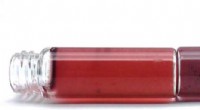
For example, oil is a nonpolar covalent molecule and does not dissolve in water. This is why oil and water separate when they are mixed together.