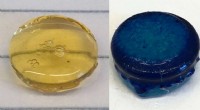
Copper and chloride do not form a covalent compound. Instead, they form an ionic compound called copper(II) chloride (CuCl2). In this compound, copper loses two electrons to become a positively charged copper(II) ion (Cu2+), while each chloride atom gains one electron to become a negatively charged chloride ion (Cl-). The electrostatic attraction between the positively charged copper(II) ions and the negatively charged chloride ions holds the compound together.