2AgNO3 + BaCl2 → BaSO4 (s) + 2Ca(NO3)2
In this reaction, the silver ions (Ag+) from silver nitrate combine with the sulfate ions (SO42-) from barium chloride to form barium sulfate, which is an insoluble compound and precipitates out of the solution. Meanwhile, the barium ions (Ba2+) from barium chloride combine with the nitrate ions (NO3-) from silver nitrate to form calcium nitrate, which remains dissolved in the solution.
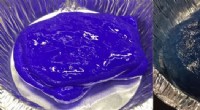
The formation of barium sulfate as a precipitate can be observed as a cloudy or milky appearance in the reaction mixture. This precipitate can be filtered out of the solution to obtain pure barium sulfate, which is a commonly used substance in various applications such as X-ray imaging and as a component in paints and pigments.