Properties of copper sulfide:
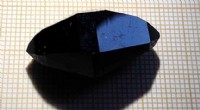
* Appearance: black or dark gray solid
* Chemical formula: CuS
* Molecular weight: 95.61 g/mol
* Density: 5.56 g/cm³
* Melting point: 1,130 °C (2,066 °F)
* Boiling point: 1,246 °C (2,275 °F)
* Solubility in water: insoluble
* Electrical conductivity: semiconductor
* Thermal conductivity: 29.2 W/m·K
* Hardness: 3.5-4.0 on the Mohs scale
Copper sulfide is used in a variety of applications, including:
* As a semiconductor material in electronic devices, such as solar cells and transistors
* As a catalyst in chemical reactions
* As a pigment in paints and ceramics
* As a fungicide and pesticide
* As a component of lubricating greases
* As a source of copper and sulfur in metallurgy
Copper sulfide is a versatile compound with a wide range of properties that make it suitable for a variety of applications.