Step 1: Equipment setup
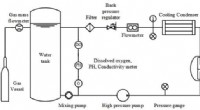
- Gather the necessary equipment, which includes a power source (e.g., a battery or power supply), two electrodes (usually made of platinum or other conductive material), and a container filled with water (ideally distilled or purified water).
Step 2: Connect the power source
- Connect the positive terminal of the power source to one of the electrodes (anode) and the negative terminal to the other electrode (cathode).
Step 3: Electrolysis process
- When an electric current is passed through the water, it causes the water molecules (H2O) to split into hydrogen ions (H+) and hydroxide ions (OH-).
- At the cathode (negative electrode), hydrogen ions gain electrons from the power source and become hydrogen gas (H2). This reaction is represented as:
2H+ + 2e- → H2(g)
- At the anode (positive electrode), hydroxide ions lose electrons to the power source and form oxygen gas (O2) and water molecules. This reaction is represented as:
4OH- → O2(g) + 2H2O + 4e-
Step 4: Collection of gases
- As electrolysis continues, hydrogen gas will be released at the cathode and oxygen gas will be released at the anode.
- The gases can be collected separately by using appropriate containers or devices, such as test tubes or gas collection tubes.
By using electrolysis, water molecules can be broken down into their constituent elements, hydrogen, and oxygen, resulting in the production of oxygen gas from water.