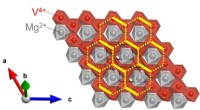
Salt bridges are important in many aspects of chemistry, such as the stability of proteins and nucleic acids, the formation of crystals, and the transport of ions across cell membranes. In proteins and nucleic acids, salt bridges help to stabilize the structure by forming bonds between charged amino acid side chains or nucleotides. In crystals, salt bridges help to hold the ions together in a regular arrangement. In cell membranes, salt bridges play a role in the transport of ions into and out of the cell.
Salt bridges can also affect the solubility of compounds in water. For example, the addition of a salt to water can cause the solubility of other ionic compounds to increase. This is because the salt bridge between the ions in the added salt helps to break up the bonds between the ions in the other compounds.
Salt bridges are a fundamental aspect of chemistry and play a role in many important biological and chemical processes. Understanding salt bridges is essential for understanding the behavior of ions in solution and the interactions between charged molecules.