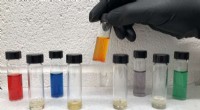
Photochromic crystals change color in response to the absorption of electromagnetic radiation, typically visible light. The absorbed light energy causes a change in the electronic structure of the crystal lattice, which in turn affects the way the material interacts with light. This can result in a change in color, or even transparency.
The effect of light on crystal growth can be used to control the size, shape, and properties of crystals. For example, studies have shown that red light can promote the growth of certain types of crystals, while blue light can inhibit growth. This knowledge can be used to optimize the crystal growth process and to produce crystals with desired properties.
Here are some specific examples of how the color of light can affect crystal growth:
- Red light can promote the growth of certain types of crystals, such as ruby and sapphire.
- Blue light can inhibit the growth of some crystals, such as quartz and calcite.
- Green light can cause some crystals to change color, such as emerald and peridot.
The effect of light on crystal growth is a complex phenomenon that is not yet fully understood. However, it is a fascinating area of research with the potential for many practical applications in the fields of optics, materials science, and photochemistry.