A hydrated compound is a chemical compound that contains water molecules bonded to its ions. These water molecules are coordinated to metal ions or other components of the compound by electrostatic or coordinate covalent bonds. Hydrated compounds are also called hydrates.
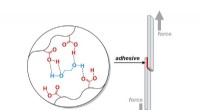
The water molecules in a hydrated compound are held in place by various forces, including:
- Coordination bonds: These are formed when a water molecule donates its lone pair of electrons to a metal ion.
- Hydrogen bonding: This is a type of dipole-dipole interaction that occurs between a water molecule and another molecule that has a partial positive charge.
- van der Waals forces: These are weak attractive forces that occur between all molecules.
The number of water molecules that are coordinated to a metal ion or other component of a hydrated compound is called the hydration number. This number can vary depending on the size and charge of the metal ion, as well as the conditions under which the compound is formed.
Hydrated compounds are found in a wide variety of applications, including:
- Food: Many foods, such as fruits and vegetables, contain hydrated compounds. These compounds help to keep the food moist and prevent it from spoiling.
- Pharmaceuticals: Many drugs are available as hydrated compounds. This form of the drug can help to improve its solubility and bioavailability.
- Industrial applications: Hydrated compounds are used in a variety of industrial applications, such as the production of cement and the manufacture of paper.
Examples of Hydrated Compounds
Some common examples of hydrated compounds include:
- Baking soda (sodium bicarbonate): NaHCO3·H2O
- Epsom salt (magnesium sulfate): MgSO4·7H2O
- Glauber's salt (sodium sulfate): Na2SO4·10H2O
- Gypsum (calcium sulfate): CaSO4·2H2O
These compounds all contain water molecules that are coordinated to the metal ions or sulfate anions. The number of water molecules that are coordinated to each ion can vary, depending on the conditions under which the compound is formed.