1. Chemical Bonding: Chemical reactions involve the formation and breaking of chemical bonds between atoms. These bonds are formed when atoms share or transfer electrons to achieve a more stable electronic configuration. When atoms are brought close together, their outermost electrons can interact and form new bonds, leading to the formation of new molecules or compounds.
2. Energy Changes: Chemical reactions involve changes in the energy states of the participating atoms or molecules. For a reaction to occur, the reactants must overcome an activation energy barrier. This energy barrier can be overcome by adding heat, light, or a catalyst. The products of the reaction usually have lower energy than the reactants, releasing energy in the form of heat or light.
3. Electronegativity and Polarity: Electronegativity is the ability of an atom to attract electrons. When atoms with different electronegativities bond, they create a polar bond, where the electrons are unequally distributed. This polarity can influence the reactivity of the molecule and its interactions with other molecules. Polar molecules tend to be more reactive than nonpolar molecules.
4. Collision Theory: The collision theory states that for a chemical reaction to occur, the reactant particles must collide with each other effectively. These collisions must have sufficient energy and the correct orientation for the reaction to take place. Factors like temperature, concentration, and surface area can affect the frequency and effectiveness of collisions.
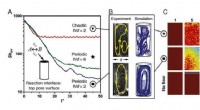
5. Reaction Surface and Transition State: The reaction surface represents the energy changes that occur during a chemical reaction. The highest point on the reaction surface is called the transition state. The reactants must overcome this energy barrier to reach the products. The transition state is a crucial step in the reaction mechanism, and its energy determines the reaction rate.
6. Catalysts: Catalysts are substances that increase the rate of a chemical reaction without being consumed in the process. They lower the activation energy of the reaction by providing an alternative pathway for the reactants to convert into products. Catalysts can be homogeneous (present in the same phase as the reactants) or heterogeneous (present in a different phase, such as a solid catalyst in a liquid reaction mixture).
These are the key factors that contribute to chemical reactions according to modern chemistry. By understanding these fundamental principles, scientists can predict, analyze, and control chemical reactions for various applications in industry, medicine, energy, and materials science.