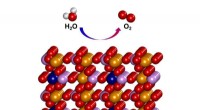
1. Molecular Structure: In a molecule, the positions of atoms are defined by their chemical bonding and the geometry of the molecule. The spatial arrangement of atoms is important in determining the molecule's shape, properties, and chemical behavior. For example, in a water molecule (H2O), the two hydrogen atoms are located on opposite sides of the oxygen atom, forming a bent molecular structure.
2. Crystal Structure: In a crystalline solid, such as a metal or a salt, the atoms are arranged in a repeating, ordered pattern called a crystal lattice. The location of atoms in a crystal structure is determined by the forces between the atoms and the symmetry of the crystal. Common crystal structures include cubic, hexagonal, and tetragonal structures, each with specific arrangements of atoms.
3. Atomic Coordinates: In crystallography and structural chemistry, the exact positions of atoms can be described using atomic coordinates. These coordinates specify the location of each atom within a unit cell, which is the repeating structural unit of the crystal. Atomic coordinates are expressed in terms of fractional positions along the crystallographic axes (x, y, z).
4. Bravais Lattices: Bravais lattices are the fundamental building blocks of crystal structures. They represent the arrangement of lattice points in a crystal, where each lattice point represents the location of an atom or a molecule. There are 14 different Bravais lattices in three dimensions, each with its characteristic arrangement of lattice points.
5. Crystallographic Planes and Directions: Crystallographic planes and directions are used to describe the orientation and arrangement of atoms in a crystal. Planes are defined by a set of Miller indices (h, k, l) that indicate the intercepts of the plane with the crystallographic axes, while directions are represented by a vector with Miller indices [uvw].
6. Atomic orbitals: In quantum mechanics and atomic physics, the location of electrons in an atom is described by atomic orbitals. These orbitals are mathematical functions that represent the probability of finding an electron in a particular region around the nucleus. Different atomic orbitals have different shapes and orientations, such as s, p, d, and f orbitals, which describe the electron distribution in atoms.
These descriptions provide a framework for understanding the arrangement and location of atoms in different chemical systems, from molecules to crystals and atoms.