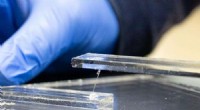
1. Condensation: Water vapor condenses into liquid water when its temperature drops below the dew point. To test for water vapor, you can cool a surface below the dew point and observe if water droplets form. For example, you can hold a cold glass or mirror near the gas and see if it fogs up.
2. Humidity sensor: A humidity sensor measures the relative humidity of the air, which is the percentage of water vapor present in the air compared to the maximum amount of water vapor the air can hold at that temperature. If the relative humidity is high, it indicates the presence of water vapor.
3. Chemical test: Certain chemicals, such as cobalt chloride paper, change color when exposed to water vapor. For example, cobalt chloride paper turns from blue to pink in the presence of water vapor.
4. Gas chromatography: Gas chromatography is a technique used to separate and identify different components of a gas mixture. Water vapor can be detected and quantified using gas chromatography by injecting a sample of the gas into a column and analyzing the separated components.
The appropriate method for testing for water vapor depends on the specific application and the required level of accuracy and sensitivity.