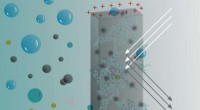
Fluidity:
1. Liquids are composed of tiny particles, such as atoms or molecules, that are not rigidly fixed in place but can move freely. Unlike solids, liquids don't have a definite shape of their own.
2. This fluidity allows liquid particles to easily flow past each other and assume the shape of any container they are placed in.
Gravity:
1. Gravity is the force that pulls objects towards the center of the Earth. When a liquid is poured into a container, gravity pulls the liquid molecules downward.
2. The molecules closest to the bottom of the container experience the strongest force of gravity and move downwards, while the molecules near the top experience a weaker force. This creates a pressure gradient within the liquid.
3. The pressure exerted by the liquid on the bottom and sides of the container pushes the liquid particles outward, causing them to fill the available space and conform to the shape of the container.
Surface Tension:
1. Surface tension is the force that acts on the surface of a liquid to minimize its surface area. Surface tension arises due to the attractive forces between the liquid molecules.
2. In a container, the liquid molecules at the surface experience unbalanced forces, as there are more liquid molecules below them than above them. This causes the surface molecules to pull inwards, creating a "skin" on the surface.
3. The surface tension acts like a stretched elastic membrane, preventing the liquid from spilling or dripping too easily. It contributes to the liquid's ability to maintain a relatively smooth and stable surface.
In summary, the fluidity of liquids allows them to flow easily, gravity pulls the liquid molecules downward creating pressure gradients, and surface tension helps maintain the surface integrity of the liquid. These factors together cause liquids to assume the shape of the containers they are poured into.