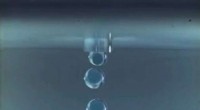
Water is called a polar molecule because its oxygen and hydrogen atoms have different electronegativities, meaning they attract electrons to different degrees. This results in a slight positive charge on the hydrogen atoms and a slight negative charge on the oxygen atom, creating a polar covalent bond. The unequal sharing of electrons in the water molecule creates a net positive and negative end, giving it polarity. This polarity allows water molecules to form hydrogen bonds with each other, where the positive hydrogen atoms of one water molecule are attracted to the negative oxygen atoms of another water molecule. These hydrogen bonds are responsible for water's unique properties, such as its high surface tension, high boiling point, and ability to act as a universal solvent.