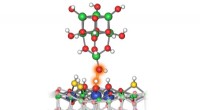
The strength of the hydrogen bonding between water molecules and solute molecules determines the solubility of the solute in water. The more polar the solute molecule, the stronger the hydrogen bonding will be and the more soluble the solute will be in water.
For example, sugar is a polar molecule because it has hydroxyl (-OH) groups that can form hydrogen bonds with water molecules. Therefore, sugar is very soluble in water.
In contrast, oil is a nonpolar molecule because it does not have any functional groups that can form hydrogen bonds with water molecules. Therefore, oil is immiscible with water.
The polarity of a molecule can also be affected by its size and shape. Larger molecules tend to be more polar than smaller molecules. This is because larger molecules have more surface area for water molecules to interact with. Additionally, molecules with a more complex shape tend to be more polar than molecules with a simple shape. This is because molecules with a more complex shape have more functional groups that can interact with water molecules.