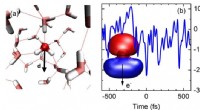
The pH of water is determined by the concentration of hydrogen ions (H+) in the solution. When the concentration of H+ ions is high, the solution is acidic, and when the concentration of H+ ions is low, the solution is basic.
The pH of water can be affected by various factors, including the presence of acids, bases, salts, and temperature. For example, adding an acid to water will increase the concentration of H+ ions, making the solution more acidic and lowering the pH. Conversely, adding a base to water will decrease the concentration of H+ ions, making the solution more basic and raising the pH.
Understanding pH is crucial in many fields, including chemistry, biology, environmental science, and medicine. It plays a vital role in determining the properties and behavior of substances in aqueous solutions, as well as the impact of these solutions on living organisms and the environment.