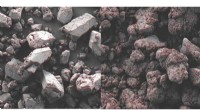
Minerals:
* Dolomite: A sedimentary rock composed of calcium magnesium carbonate.
* Magnesite: A sedimentary rock primarily composed of magnesium carbonate.
* Brucite: A mineral composed of magnesium hydroxide.
* Carnallite: A mineral composed of potassium and magnesium chloride.
* Epsomite: A mineral composed of magnesium sulfate.
Seawater:
Seawater contains a significant amount of dissolved magnesium ions. Magnesium contributes approximately 3.5% of the dissolved solids in seawater.
Brines:
Brines are concentrated salt solutions found in underground reservoirs or salt lakes. They often contain high concentrations of magnesium ions, particularly in areas with extensive salt deposits.
Other Sources:
* Certain plants, such as leafy greens, nuts, and seeds, contain magnesium.
* Magnesium supplements are also available in various forms, including tablets, capsules, and powders.
Magnesium is not found naturally in its elemental form because it is a highly reactive metal. Elemental magnesium readily undergoes oxidation and reacts with various elements, including oxygen, nitrogen, and hydrogen, to form more stable compounds. As a result, it is typically found in combination with other elements in ores and minerals.