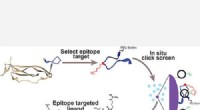
Covalent bonds are formed when two or more atoms share electrons. The shared electrons are held in a region of space between the atoms called a molecular orbital. The molecular orbital is a region where the probability of finding the shared electrons is highest. Covalent bonds are the strongest type of chemical bond.
Ionic bonds are formed when one atom transfers one or more electrons to another atom. The atom that loses the electrons becomes positively charged, and the atom that gains the electrons becomes negatively charged. The oppositely charged ions are attracted to each other by electrostatic forces. Ionic bonds are weaker than covalent bonds, but they are still very strong.
Metallic bonds are formed when the valence electrons of metal atoms are delocalized, meaning that they are not associated with any particular atom. The delocalized electrons form a "sea" of electrons that flows throughout the metal. Metallic bonds are the weakest type of chemical bond, but they are still strong enough to hold metals together.
The type of chemical bond that forms between two atoms depends on the electronegativity of the atoms. Electronegativity is a measure of how strongly an atom attracts electrons. The greater the difference in electronegativity between two atoms, the stronger the chemical bond between them.







![Vapor-Induced Liquid–Solid Phase Switching in Macrocyclic Pillar[6]arene Systems](https://www.scienceaq.com/article/uploadfiles/202110/2021102312252778_S.jpg)