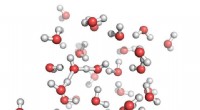
For example, consider the ionization of acetic acid in water:
$$CH_3COOH + H_2O ⇌ CH_3COO^- + H_3O^+$$
Initially, the concentration of un-ionized acetic acid is relatively high, so based on the Le Châtelier's principle and equilibrium constant expression below, the position of equilibrium lies on the left side favoring the reactants; there are relatively low concentrations of H+ and A- ions:
$$K_a = \frac{[CH_3COO^-][H_3O^+]}{[CH_3COOH]}$$
As the concentration of acetic acid decreases (through dilution), the equilibrium shifts towards the right. This shift happens because there are not enough acetic acid molecules in the solution to react with most of the H+ and A- ions. Hence, the concentration of both H+ and A- ions increases which leads to a higher dissociation or ionization of acetic acids in a dilute solution.