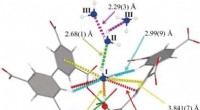
Water molecules (H2O) exhibit hydrogen bonding due to the presence of a highly electronegative oxygen atom and two hydrogen atoms. The oxygen atom in water attracts electrons more strongly than hydrogen, creating a partial negative charge (δ-) on the oxygen and partial positive charges (δ+) on the hydrogen atoms. This polarity enables the hydrogen atoms of one water molecule to form hydrogen bonds with the oxygen atom of another water molecule. The hydrogen bonds between water molecules result in the formation of a cohesive network, which is responsible for water's unique properties, such as its high surface tension, high specific heat capacity, and ability to dissolve many substances.
No hydrogen bonding in hydrochloric acid:
Hydrochloric acid (HCl) is a compound composed of hydrogen and chlorine atoms. Unlike water, hydrochloric acid does not exhibit hydrogen bonding. This is because the electronegativity difference between hydrogen and chlorine is not as significant as between hydrogen and oxygen. The chlorine atom in HCl attracts electrons more strongly than hydrogen, but the difference in electronegativity is not sufficient to create a significant partial charge separation and enable hydrogen bonding. Additionally, the presence of the highly electronegative chlorine atom in HCl makes the hydrogen atom less available for hydrogen bonding.
In summary, the presence of strong hydrogen bonding in water is a result of the high electronegativity difference between oxygen and hydrogen, which allows for the formation of partial charges and the subsequent hydrogen bonds. In contrast, hydrochloric acid lacks significant hydrogen bonding due to the lower electronegativity difference between hydrogen and chlorine.