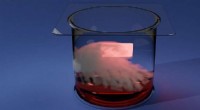
Ethylene (ethene) reacts with bromine water to form 1,2-dibromoethane. This reaction is characteristic of alkenes, which are hydrocarbons with a double bond between two carbon atoms. The double bond is broken and two bromine atoms are added to the molecule.
Ethyne (acetylene) reacts with bromine water to form tetrabromoethane. This reaction is characteristic of alkynes, which are hydrocarbons with a triple bond between two carbon atoms. The triple bond is broken and four bromine atoms are added to the molecule.
The following table summarizes the reactions of ethylene and ethyne with bromine water:
| Compound | Reaction with Bromine Water |
|---|---|
| Ethylene (ethene) | 1,2-dibromoethane |
| Ethyne (acetylene) | tetrabromoethane |
These reactions can be used to distinguish between ethylene and ethyne. If a sample of gas reacts with bromine water to form 1,2-dibromoethane, then the gas is ethylene. If a sample of gas reacts with bromine water to form tetrabromoethane, then the gas is ethyne.