A substance reacts as an acid if it:
- Gives off hydrogen ions when dissolved in water
- Turns blue litmus red
- Tastes sour
- Reacts with metals such as Zn to give off flammable hydrogen gas
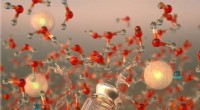
Acids release hydrogen ions (H+) in water. This is due to the polar nature of water molecules. The oxygen atom in water has a partial negative charge, while the hydrogen atom has a partial positive charge. This polarity allows water molecules to break apart acid molecules, causing them to release H+ ions.
The strength of an acid is determined by its ability to donate H+ ions. The more easily an acid donates H+ ions, the stronger it is. Acids are classified as strong or weak based on their degree of ionization in water.
- Strong acids completely dissociate in water, releasing all of their H+ ions. Examples of strong acids include hydrochloric acid (HCl), sulfuric acid (H2SO4), and nitric acid (HNO3).
- Weak acids only partially dissociate in water, releasing only a small fraction of their H+ ions. Examples of weak acids include acetic acid (CH3COOH), carbonic acid (H2CO3), and phosphoric acid (H3PO4).
The pH scale is used to measure the acidity or basicity of a solution. The pH scale ranges from 0 to 14, with 7 being neutral. Solutions with a pH below 7 are acidic, while solutions with a pH above 7 are basic.