Home
Chemistry
Astronomy
Energy
Nature
Biology
Physics
Electronics
Science
>>
Science Discoveries
> >>
Chemistry
Chlorine's Bonding Capacity: Understanding Double Covalent Bonds
Chlorine atom can form a double covalent bond. For example, in ethylene dichloride (C2H4Cl2), each chlorine atom forms a double covalent bond with one of the carbon atoms.
Heat Released from Heptane Combustion: A Calculation
Compound Composition: Understanding Fixed Ratios & Chemical Formulas
Chemistry
Harnessing Methanol Biotransformation for Efficient Yeast-Based Fatty Acid Production
Scientists Build Nanometer-Scale Interlocking Chains, Pushing the Limits of Molecular Engineering
Engineering Artificial Chemical-Sensing Cells from the Ground Up
Science Discoveries
How Protoplanetary Rings Form Around Young Stars: Insights into Planet Birth
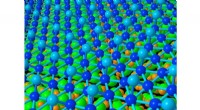
Germanium Self‑assembles into a 2‑D Bitriangular Lattice on Zirconium Diboride Thin Films
Scientists Engineer Tomatoes with Superior Antioxidant Levels
Science Discoveries
Chemistry
Astronomy
Energy
Nature
Biology
Physics
Electronics
Geology
Solar Eclipse
Math
other
Nanotechnology
Chemistry
Breakthrough Methodology for Accurate Corrosion Rate Prediction in Metals
Valencia University’s Electronic Tongue Rapidly Detects Honey Adulteration
Rice University Tests Silicon Anodes with Alumina-Coated Cathodes for Enhanced Battery Stability
Titanium Dioxide Leads Breakthrough Research at Cracow Synchrotron
New Study Reveals Dynamic Charge States in Single‑Atom Catalysts, Boosting Efficiency
SoyMicrobeads: Sustainable, Eco‑Friendly Replacement for Plastic Microbeads in Cosmetics & Soaps
|
Geology
|
Math
|
Solar Eclipse
Science Discoveries © www.scienceaq.com