Atomic and Molecular Structure: Physical chemistry delves into the structure of atoms and molecules, including the arrangement of electrons, atomic orbitals, molecular geometry, and chemical bonding. Understanding these structures provides insights into the properties and reactivity of substances.
Thermodynamics: This branch of physical chemistry deals with energy changes, heat transfer, entropy, and spontaneity of reactions. It helps predict the direction and equilibrium of chemical processes and provides a quantitative understanding of energy flow and transformations.
Chemical Kinetics: Physical chemistry studies the rates of chemical reactions, including the factors that influence reaction speeds and the mechanisms by which reactions occur. It allows scientists to understand and control reaction pathways for efficient chemical processes.
Electrochemistry: This field investigates the relationship between electrical phenomena and chemical processes. It includes the study of electrochemical cells, batteries, fuel cells, and electrolysis, providing insights into energy conversion and storage technologies.
Quantum Mechanics: Quantum mechanics plays a crucial role in physical chemistry, particularly in explaining atomic and molecular interactions and properties at the quantum level. It enables a deep understanding of chemical bonding, spectroscopy, and the behavior of particles on a subatomic scale.
Materials Science: Physical chemistry is essential in the development and characterization of advanced materials. It helps scientists design and create new materials with desired properties for various applications, such as semiconductors, superconductors, polymers, and nanomaterials.
Surface Chemistry: This field focuses on the interactions and phenomena that occur at the surfaces of materials. It investigates surface properties, adsorption, catalysis, and heterogeneous reactions, which have significant implications in fields such as catalysis, environmental science, and biotechnology.
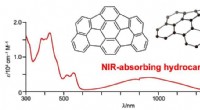
Spectroscopy: Physical chemistry employs various spectroscopic techniques to study the interactions of matter with different forms of energy, including light, microwaves, and radio waves. Spectroscopy provides information about molecular structure, composition, and dynamics.
Computational Chemistry: With the advent of powerful computers, computational chemistry has become an important tool for simulating and modeling chemical processes. It allows scientists to study complex systems, predict properties, and design new molecules virtually.
These are just a few examples of the discoveries and concepts that emerge at the junction of physics and chemistry. By combining the principles and methods of both disciplines, physical chemistry plays a vital role in advancing our understanding of the natural world and developing innovative technologies with broad societal impacts.