The study, titled "Radionuclide trafficking in human renal epithelial cells: insights from correlative cryoelectron microscopy and X-ray fluorescence microscopy," was published in the journal "Scientific Reports." The research team utilized a combination of state-of-the-art cryo-electron microscopy and X-ray fluorescence microscopy to visualize and analyze the uptake, distribution, and effects of radionuclides in human kidney epithelial cells.
Key findings from the study:
1. Radionuclide Uptake and Accumulation: The researchers observed that human renal epithelial cells effectively take up various radionuclides, including uranium, thorium, plutonium, and americium. These radionuclides were found to accumulate in specific cellular compartments, such as the lysosomes and mitochondria.
2. Time-Dependent Accumulation: The study revealed a time-dependent increase in the accumulation of radionuclides in the kidney cells. The longer the exposure to the radionuclides, the higher the levels of accumulation.
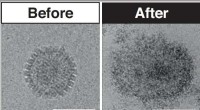
3. Ultrastructural Changes: Advanced cryo-electron microscopy allowed the visualization of ultrastructural changes in the cells induced by radionuclide exposure. These changes included alterations in the cellular organelles and the formation of radiation-induced foci, indicating potential damage to the cells.
4. Radionuclide Distribution: X-ray fluorescence microscopy enabled the precise localization of radionuclides within the cells. Uranium, thorium, and plutonium were found to distribute throughout the cells, while americium was more localized in the lysosomes.
5. Potential Health Effects: The findings suggest that the accumulation of radionuclides in kidney cells may have detrimental effects on cellular function, including impaired mitochondrial respiration and DNA damage. These observations provide insight into the potential long-term health risks associated with radionuclide exposure.
This study contributes to a comprehensive understanding of the interactions between radionuclides and kidney cells. By combining cutting-edge microscopy techniques, the research team has gained valuable knowledge about the uptake, distribution, and cellular effects of radionuclides, which can inform radiation protection strategies and risk assessment in occupational and environmental settings.
The findings highlight the importance of ongoing research in radiobiology to elucidate the mechanisms underlying the harmful effects of ionizing radiation and to develop effective countermeasures to protect human health.