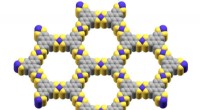
Porous polymers are a class of materials with a high surface area and a high porosity. This makes them ideal for gas storage and separation, catalysis, and other applications. However, porous polymers can be unstable under high pressure, which limits their use in some applications.
Stability at high pressure
The stability of porous polymers at high pressure is influenced by a number of factors, including the polymer structure, the type of gas or liquid being stored or separated, and the temperature and pressure conditions.
The polymer structure is important because it affects the mechanical properties of the material. Polymers with a rigid structure are more likely to be stable at high pressure than polymers with a flexible structure. The type of gas or liquid being stored or separated is also important because some gases and liquids can react with the polymer and cause it to degrade. Finally, the temperature and pressure conditions can affect the stability of porous polymers. Higher temperatures and pressures can lead to increased degradation of the polymer.
Remarkable stability at high pressure
Despite these challenges, some porous polymers have shown remarkable stability at high pressure. For example, a study by researchers at the University of California, Berkeley, showed that a porous polymer called PIM-1 was stable at pressures up to 10,000 atm. This is equivalent to the pressure at the bottom of the Mariana Trench, the deepest point in the ocean.
The remarkable stability of PIM-1 is due to its unique structure. PIM-1 is a ladder polymer, which means that it has a repeating structure of alternating benzene rings and nitrogen atoms. This structure gives PIM-1 a high degree of rigidity, which makes it resistant to compression. PIM-1 is also resistant to chemical degradation, which makes it ideal for storing and separating gases and liquids.
Applications of porous polymers at high pressure
The remarkable stability of some porous polymers at high pressure makes them ideal for a variety of applications, including:
* Gas storage and separation
* Catalysis
* Energy storage
* Water treatment
Porous polymers are a promising new class of materials with a wide range of potential applications. The development of porous polymers that are stable at high pressure will enable the use of these materials in more extreme environments, such as deep sea oil and gas exploration, and in the aerospace industry.