A research team led by researchers at the National University of Singapore (NUS) has uncovered how the paradise and leafbirds form complex, periodic nanostructures in their feathers -- the underlying structures responsible for their vivid, flashy colours.
These microscopic nanostructures act like natural mini-prisms that split and reflect light in a specific manner, leading to their unique iridescent appearance.
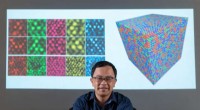
To understand the complexity and diversity of these nanostructures, the team captured detailed images of the nanostructures using high-resolution microscopic imaging and computed tomography.
Through detailed microscopic and modelling analysis, the team found that the nano-architecture in the birds' feathers consists of a stack of layers, with each layer made up of tiny air sacs (known as air holes) arranged in a lattice.
The lattice arrangement leads to the formation of photonic crystals, which are periodically structured materials that interact with light in unique ways.
By varying the arrangement, size, and shape of the air holes in the photonic crystals, the birds control the amount of light reflected to create an array of vibrant hues and iridescence.
The study is published in the scientific journal Nature Communications and provides an essential step toward understanding the intricate physics behind the brilliant colors seen in nature.
This knowledge could have potential implications in bio-inspired technological applications, such as developing novel optical devices and materials with tailored light-reflecting properties.