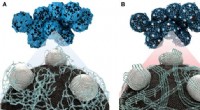
Electron Transfer: Geobacter bacteria use their pili to transfer electrons to insoluble uranium oxides, such as uranium dioxide (UO2). This process creates a reducing environment around the bacteria, promoting the reduction of uranium to a more soluble form.
Uranium Reduction: As Geobacter bacteria transfer electrons to uranium oxides, they reduce the uranium from a higher oxidation state (+6 in UO2) to a lower oxidation state (+4 in uranium(IV) oxide, UO2). This reduction process makes uranium more soluble, facilitating its subsequent uptake by the bacteria.
Formation of Uranium Nanocrystals: In the presence of reduced uranium, Geobacter bacteria further facilitate the formation of uranium nanocrystals within their extracellular polymeric substances (EPS). These EPS are composed of various organic compounds, including proteins, polysaccharides, and lipids, which act as binding sites for uranium.
EPS Matrix: The EPS produced by Geobacter bacteria can bind uranium and form a dense matrix, creating a "sponge-like" structure that entraps uranium ions. This EPS matrix serves as a reservoir for uranium accumulation, enabling the bacteria to sequester significant amounts of uranium from the surrounding environment.
Biofilm Formation: Geobacter bacteria often form biofilms, which are complex communities of cells that attach to surfaces and produce EPS. These biofilms enhance the ability of Geobacter to interact with uranium-bearing minerals and enhance uranium sequestration.
By employing these mechanisms, Geobacter bacteria effectively soak up uranium through electron transfer, uranium reduction, formation of uranium nanocrystals, EPS binding, and biofilm formation. This bioremediation process offers a natural and eco-friendly approach for removing uranium from contaminated environments.