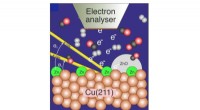
To perform their observations, the team used a substrate surface of a metal oxide called strontium titanate, which is known for its ability to form crystal structures. Then, they applied a thin layer of liquid containing the material to be crystallized, in this case, a solution of lead chloride. Using the combination microscopy technique, they observed how the solution droplets evaporated and the lead chloride molecules started to reorganize and assemble into a crystal structure at the surface. The whole process was captured at unprecedented spatial and temporal resolution, showing the nucleation, growth, and coalescence of individual crystals.
This new approach allows scientists to directly observe and follow the behavior of molecules as they assemble into intricate patterns and structures. Such knowledge is crucial for understanding how crystals form, control their size, shape, and properties, and ultimately tailor them for specific applications.
For instance, the pharmaceutical industry heavily relies on crystallization to produce drugs in their desired form. However, controlling the crystallization process can be challenging, often resulting in inconsistent or defective crystals that affect the drug's performance or bioavailability. By using this new technique, researchers can now better understand the factors influencing crystal growth and modify them to achieve the desired outcomes.
Furthermore, the technique has applications beyond the pharmaceutical industry. It can also shed light on the formation of crystals in geological processes, electronic materials, and even in biological systems such as the formation of teeth and bones.
Overall, this new microscopy technique offers a powerful tool to study crystallization phenomena at the nanoscale and opens the door to new discoveries in materials science and related fields.