PZT is a very efficient piezoelectric material, but it contains lead, which is toxic and harmful to the environment. Bismuth ferrite is a lead-free alternative that has been studied for some time, but its piezoelectric properties are not as well understood as those of PZT.
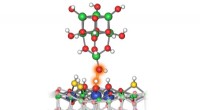
The researchers used a combination of experimental techniques and theoretical calculations to determine how bismuth ferrite works. They found that the material's piezoelectric properties are due to the displacement of bismuth and oxygen atoms within the crystal structure. This displacement creates a net electric dipole moment, which is responsible for the material's piezoelectric properties.
The researchers' findings provide a new understanding of how bismuth ferrite works, which could lead to the development of new lead-free piezoelectric materials with improved properties. This could have a significant impact on a wide range of applications, from ultrasound devices to sensors and actuators.
The study, "Direct Observation of the Displacement Mechanism of Bismuth and Oxygen in Lead-Free Piezoelectric Bismuth Ferrite Ceramics", was published in the journal Physical Review Letters.