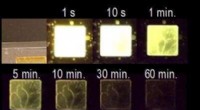
X-ray lasers are incredibly powerful tools that can be used to study the properties of matter at the atomic level. By focusing an intense beam of X-rays onto a sample, scientists can create a state of matter called "supercharged atoms." In this state, the atoms have been stripped of all their electrons, leaving behind only the bare nucleus.
Supercharged atoms are extremely unstable and will quickly recombine with electrons to form neutral atoms. However, during the brief moment that they exist, they can be studied to learn about the fundamental properties of matter. For example, scientists can use X-ray lasers to measure the size of atomic nuclei and to study the interactions between electrons and nuclei.
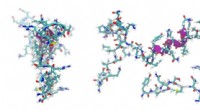
X-ray lasers are also being used to develop new technologies, such as X-ray imaging and microscopy. These technologies could be used to study the structure of proteins, viruses, and other biological molecules. They could also be used to develop new materials for use in electronics, energy storage, and other applications.
Here is a step-by-step guide on how to supercharge atoms with an X-ray laser:
1. Generate an intense beam of X-rays. This can be done using a variety of methods, such as a synchrotron or an X-ray free-electron laser.
2. Focus the X-ray beam onto a sample. The sample should be thin enough to allow the X-rays to penetrate it.
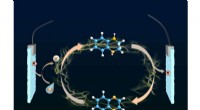
3. The X-rays will interact with the atoms in the sample, causing them to lose their electrons. The atoms will then be in a supercharged state.
4. The supercharged atoms will quickly recombine with electrons to form neutral atoms. However, during the brief moment that they exist, they can be studied to learn about the fundamental properties of matter.
X-ray lasers are a powerful tool that can be used to study the properties of matter at the atomic level. They are also being used to develop new technologies, such as X-ray imaging and microscopy. These technologies could have a major impact on a wide range of fields, from biology to materials science.