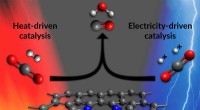
The research, published in the journal 'Joule,' is based on the discovery of a new type of catalyst composed of copper and indium atoms dispersed on a bed of silica, which enables the conversion of CO2 and hydrogen gas into methanol with exceptional efficiency and selectivity. While previous methods required high temperatures and pressures, this new catalytic system operates at ambient temperature and pressure, making it more energy-efficient and cost-effective.
"Our new catalyst represents a major breakthrough in the field of carbon capture and utilization because it can efficiently and selectively convert CO2, a major greenhouse gas, into methanol, a valuable chemical with diverse applications," said Professor Erwin Reisner from the University of Cambridge's Department of Chemistry, who led the research.
Key findings and implications:
Green Methanol Production: The new catalyst enables the direct conversion of CO2 into methanol, providing a sustainable alternative to traditional methanol production from fossil fuels. By utilizing CO2 as a feedstock, this approach has the potential to reduce greenhouse gas emissions and mitigate climate change.
Efficient and Selective: The copper-indium catalyst demonstrates exceptional efficiency and selectivity for methanol synthesis, with nearly 100% of the CO2 converted into methanol. This high efficiency reduces energy consumption and waste production, making the process economically viable.
Low Energy Requirements: The catalytic system operates at ambient temperature and pressure, eliminating the need for harsh reaction conditions. This energy-efficient approach significantly lowers production costs and simplifies the industrial implementation of CO2 conversion technology.
Versatile Applications: Methanol is an important chemical intermediate widely used in various industries. It can be further processed into gasoline, diesel, and other transportation fuels, or used as a feedstock for producing plastics, pharmaceuticals, and other chemicals.
By combining the principles of green chemistry, catalysis, and sustainability, this research offers a promising solution to the challenge of carbon dioxide emissions. The low energy requirements and high efficiency of the new catalytic system make it an attractive option for industries seeking to reduce their environmental impact while maintaining economic viability.
The development of this highly effective method for converting CO2 into methanol brings us closer to a circular carbon economy, where emissions from industrial processes are recaptured and transformed into valuable products. This innovative technology has the potential to significantly contribute to the global efforts in combating climate change and transitioning towards a more sustainable future.