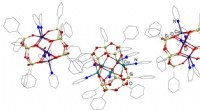
The map, published in the journal eLife, shows how the enzyme, known as squalene-hopene cyclase (SHC), converts squalene, a flexible 30-carbon molecule, into a rigid, four-ring structure called hopene. This transformation is a critical step in the multi-step process of synthesizing cholesterol, which is abundant in the brain and other organs and plays a vital role in many biological functions, including the formation of cell membranes, hormone synthesis, and digestion of fats.
"This discovery gives us a better understanding of how cholesterol is made and how we might be able to intervene in this process to treat diseases such as atherosclerosis and cancer," said senior author Yilin Lu, a chemistry professor at the University of California, Davis. "It's also an exciting example of the kind of scientific research that can be done using large-scale X-ray crystallography."
Lu's team used the Advanced Light Source (ALS), a synchrotron facility at the U.S. Department of Energy's Lawrence Berkeley National Laboratory, to capture X-ray snapshots of SHC in action. They found that the SHC enzyme undergoes a series of conformational changes, like a hand closing around an object, as it converts squalene to hopene.
"This is the first atomic-level movie of how SHC works," Lu said. "We can see how the enzyme binds to squalene and then folds around it to form the four-ring structure."
The map also reveals the key amino acids in the SHC enzyme that are responsible for catalyzing the conversion of squalene to hopene. These amino acids could serve as potential targets for drugs designed to inhibit the synthesis of cholesterol.
"This discovery provides new insights into the intricate mechanisms underlying cholesterol biosynthesis and offers a promising avenue for the development of therapeutic strategies for cholesterol-related diseases," Lu said.