Adatoms are individual atoms that are adsorbed onto a surface. When these adatoms are mobile, they can move around the surface and interact with each other. This mobility can lead to the formation of new chemical bonds and the breaking of old ones. In a recent study, chemists have used dancing adatoms to understand how water molecules split.
Water molecules are composed of two hydrogen atoms and one oxygen atom. The hydrogen atoms are bonded to the oxygen atom by covalent bonds, which are strong chemical bonds. However, water molecules can also be split into hydrogen and oxygen atoms by a process called electrolysis. Electrolysis is a process that uses electricity to break apart chemical bonds.
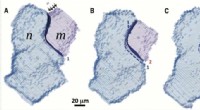
In the recent study, chemists used a scanning tunneling microscope (STM) to observe the behavior of adatoms on a surface. An STM is a microscope that uses a sharp metal tip to scan a surface. The tip is moved very close to the surface, and the tunneling effect allows electrons to flow between the tip and the surface. This flow of electrons creates an image of the surface.
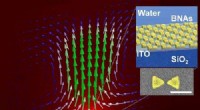
The chemists used the STM to observe the behavior of adatoms on a surface that was covered with a layer of water molecules. They found that the adatoms were able to move around the surface and interact with each other. This mobility led to the formation of new chemical bonds and the breaking of old ones. The chemists were able to use this information to understand how water molecules split.
The results of this study could have implications for the development of new water-splitting technologies. Water splitting is a promising way to produce hydrogen fuel, which is a clean and renewable energy source. However, current water-splitting technologies are inefficient. The results of this study could lead to the development of new water-splitting technologies that are more efficient and cost-effective.