The method, called X-ray fluorescence (XRF) imaging, works by bombarding a sample with X-rays and then measuring the characteristic X-rays that are emitted by the sample's atoms. The energy of these characteristic X-rays is unique for each element, so by measuring the energy of the X-rays emitted by a sample, it is possible to identify the elements present in the sample.
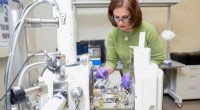
In the NIST experiments, a beam of X-rays was directed at a sample of nuclear material. The characteristic X-rays emitted by the sample were detected by a spectrometer, which measured their energy. The results showed that XRF imaging could be used to identify nuclear materials, even when they were hidden inside other objects.
The NIST experiments represent a proof of concept for XRF imaging as a method for detecting nuclear materials. More research is needed to develop a practical system that could be used in real-world applications. However, the results of these experiments suggest that XRF imaging has the potential to be a valuable tool for detecting nuclear materials, and thus improve security and safeguard public health.