A team of researchers, including scientists from the Department of Energy’s (DOE) Brookhaven National Laboratory and Yale University, discovered how a water molecule assists a cobalt-based molecule in converting carbon dioxide into carbon monoxide, a versatile building block for various products such as plastics and fuels. The study suggests that fine-tuning the environment around a catalyst could make the catalytic reactions more efficient and environmentally friendly.
Carbon dioxide is a greenhouse gas that contributes to climate change. Converting CO2 into useful products could mitigate its environmental impact while producing valuable resources. However, developing efficient catalysts to drive this conversion reaction remains a significant challenge.
The research team focused on a cobalt-based molecule known as a cobalt porphyrin complex. They used a combination of X-ray and neutron spectroscopy techniques at the National Synchrotron Light Source II (NSLS-II) and Center for Functional Nanomaterials (CFN), both DOE Office of Science User Facilities located at Brookhaven Lab, as well as theoretical calculations, to investigate how the presence of a water molecule affects the catalytic activity of the cobalt porphyrin complex.
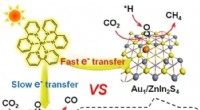
Their findings revealed that the water molecule significantly enhances the molecule's catalytic power by facilitating the formation and stabilization of a crucial intermediate in the reaction pathway. This intermediate, which contains both carbon dioxide and a proton from the water molecule, is essential for converting carbon dioxide into carbon monoxide.
The research provides valuable insights into how the local environment around a catalyst can influence its catalytic activity. By carefully designing the catalyst's environment, it is possible to enhance the catalytic efficiency and selectivity for converting carbon dioxide into desired products, potentially leading to greener and more sustainable chemical processes in the future.
The study, titled "Water-Assisted Electrochemical CO2 Reduction to CO Mediated by a Cobalt Porphyrin Complex," was published in the journal Angewandte Chemie International Edition.