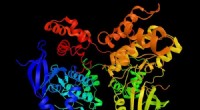
Proteins are essential to life, and they perform a wide variety of functions in cells. In order to function properly, proteins must be folded into the correct shape. The process of protein folding is complex and not fully understood. However, nuclear magnetic resonance (NMR) spectroscopy is a powerful tool that can be used to study protein folding.
NMR spectroscopy is a non-destructive technique that can provide detailed information about the structure and dynamics of proteins. By using enhanced-sensitivity NMR techniques, scientists can now study proteins in greater detail than ever before. This could lead to new insights into how proteins fold and function.
How does enhanced-sensitivity NMR work?
Enhanced-sensitivity NMR techniques use a variety of methods to improve the sensitivity of NMR spectroscopy. These methods include:
* Cryogenic probes: Cryogenic probes are cooled to very low temperatures, which reduces the noise level and improves the sensitivity of the NMR spectrometer.
* Hyperpolarization: Hyperpolarization techniques can be used to increase the polarization of the nuclei in a sample. This can improve the sensitivity of the NMR spectrometer by up to a factor of 100.
* Dynamic nuclear polarization (DNP): DNP is a technique that uses microwave radiation to polarize the nuclei in a sample. This can improve the sensitivity of the NMR spectrometer by up to a factor of 10,000.
What are the applications of enhanced-sensitivity NMR in protein folding studies?
Enhanced-sensitivity NMR spectroscopy can be used to study a variety of aspects of protein folding, including:
* The structure of unfolded proteins: Enhanced-sensitivity NMR spectroscopy can be used to determine the structure of unfolded proteins. This information can help to understand the early stages of protein folding.
* The dynamics of protein folding: Enhanced-sensitivity NMR spectroscopy can be used to study the dynamics of protein folding. This information can help to understand how proteins fold into their final shape.
* The interactions between proteins and other molecules: Enhanced-sensitivity NMR spectroscopy can be used to study the interactions between proteins and other molecules, such as ligands and chaperones. This information can help to understand how proteins function in cells.
Enhanced-sensitivity NMR spectroscopy is a powerful tool that can be used to study protein folding in greater detail than ever before. This could lead to new insights into how proteins fold and function.