Oxygen, being the most abundant element in Earth's atmosphere, plays a crucial role in numerous chemical processes. However, the intricacies of how oxygen molecules behave when they collide and absorb light have remained a mystery, despite decades of research. This knowledge gap has limited our understanding of atmospheric phenomena, chemical reactions, and the behavior of oxygen-based materials.
The research team, led by Professor John Stanton of UC Berkeley and Professor Jochen Küpper of the Max Planck Institute, employed a cutting-edge combination of high-resolution spectroscopic techniques and theoretical calculations to unravel the complex dynamics of colliding oxygen molecules. They focused on the near-infrared region of the electromagnetic spectrum, where oxygen molecules exhibit distinctive absorption features.
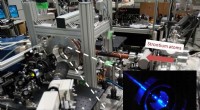
Using a powerful laser system, the researchers generated intense light pulses that precisely probed the molecular interactions within colliding oxygen pairs. By analyzing the resulting spectra, they identified specific vibrational and rotational transitions that occurred during the collisions. These observations provided crucial insights into the energy exchange and internal dynamics of the oxygen molecules.
To complement the experimental findings, the research team performed sophisticated theoretical calculations based on quantum mechanics. These calculations simulated the interactions between oxygen molecules at an atomic level, allowing for the precise determination of molecular properties and energy states. The theoretical models not only corroborated the experimental observations but also provided additional details about the collision dynamics and energy transfer mechanisms.
The combination of experimental and theoretical approaches in this study represents a significant advancement in the field of molecular spectroscopy. The results provide a comprehensive understanding of how colliding oxygen molecules absorb light, offering new insights into atmospheric processes, chemical reactivity, and the behavior of oxygen in various environments.
The findings hold promise for a range of applications. In the field of atmospheric chemistry, the knowledge gained from this study can enhance the modeling and prediction of atmospheric phenomena, including the formation and depletion of ozone, air pollution chemistry, and greenhouse gas effects. In addition, the study has implications for understanding the behavior of oxygen in combustion processes, fuel cells, and other oxygen-based energy conversion systems.
The discovery opens up new avenues for exploring the fundamental behavior of molecules and their interactions with light. By unlocking the secrets of colliding oxygen molecules, researchers have taken a significant step toward unraveling the complexities of the molecular world, paving the way for future advancements in chemistry, physics, and related scientific disciplines.