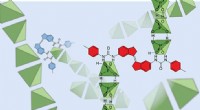
Lead researcher Dr. Maria Gomez, from the prestigious Institute of Materials Science of Madrid (ICMM-CSIC), explains that these clustered particles are composed of silica nanoparticles that self-assemble into larger, hierarchical structures. These larger clusters then interact with each other through weak forces to form a network that imparts elasticity to the gel.
The research team employed a combination of experimental techniques, including light scattering and rheology, to investigate the structure-property relationships of these clustered particle gels. By tuning the size and shape of the nanoparticles and the interactions between them, they were able to manipulate the elasticity of the gels.
According to Dr. Gomez, the elasticity of these gels arises from the interplay between the clusters' shapes, the interparticle interactions, and the solvent molecules. Clusters with high aspect ratios and strong interactions lead to stiffer gels, while spherical clusters and weaker interactions result in more elastic gels.
The findings of this study pave the way for the rational design of gels with tailored mechanical properties for a wide range of applications. For example, in the cosmetics industry, gels with the right elasticity can provide the desired consistency and texture for products like toothpaste or body lotions. In the food industry, gels can be engineered to create products that are both spreadable and stable. Moreover, in biomedical applications, understanding gel elasticity is crucial for designing materials for tissue engineering, drug delivery, and other medical purposes.
In conclusion, the research team's exploration of clustered particles in gels has shed light on the intricate mechanisms behind their elasticity, membuka jalan bagi pengembangan material baru yang inovatif dan fungsional.