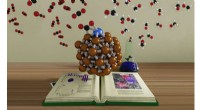
Fusion is a process that combines two atoms into one, releasing a great amount of energy. In a fusion reactor, deuterium and tritium are heated to extremely high temperatures and combined to form helium and a neutron. The neutron carries most of the energy released by the fusion reaction, and it must be absorbed by the reactor walls to prevent it from damaging the reactor components.
Tungsten is one of the leading candidates for the material that will be used to armor the walls of a fusion reactor. However, tungsten is also brittle, and it can be damaged by the high energy neutrons released by the fusion reaction. Researchers at the NIF are studying how tungsten isotopes, which are different forms of tungsten with different numbers of neutrons, can be used to improve the performance of tungsten armor in a fusion reactor.
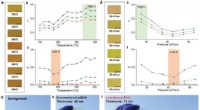
The researchers used a powerful laser to heat tungsten samples to temperatures of over 1 million degrees Celsius. They then added deuterium and tritium to the samples and studied how the tungsten interacts with the gases. The results of the study showed that the tungsten isotopes behave differently in the presence of deuterium and tritium, and that the differences in behavior could be used to improve the performance of tungsten armor in a fusion reactor.
The study is a significant step forward in the development of materials that can withstand the extreme conditions inside a fusion reactor. The results of the study will be used to design and test new tungsten armor materials for ITER, and they will help to pave the way for the development of future fusion reactors.