A new study has shed light on how methane, a potent greenhouse gas, breaks through icy barriers on the sea floor and enters the atmosphere. The findings could help scientists better understand how climate change is affecting the release of methane from Arctic seabeds, which could have significant implications for the global climate.
The study, published in the journal Nature Geoscience, was conducted by researchers from the University of Texas at Austin. The team used a combination of laboratory experiments and computer modeling to investigate how methane gas accumulates beneath the sea ice and eventually breaks through to the atmosphere.
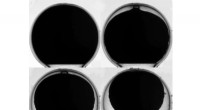
The researchers found that methane gas bubbles can form beneath the sea ice when organic matter on the sea floor decomposes. As the bubbles rise, they encounter a layer of ice that can act as a barrier, preventing them from escaping into the atmosphere. However, the researchers found that the bubbles can eventually break through the ice if they are large enough and if the ice is sufficiently thin.
The findings of the study suggest that climate change could lead to increased methane release from Arctic seabeds. As the Arctic sea ice melts, the ice cover will become thinner and less able to prevent methane bubbles from escaping into the atmosphere. This could lead to a positive feedback loop, where the release of methane from the sea floor contributes to further climate change.
The study's lead author, Dr. Carolyn Ruppel, said that the findings are important for understanding the potential impacts of climate change on the Arctic. "Our study provides new insights into how methane gas is released from the sea floor and how this process could be affected by climate change," she said. "This information is critical for developing strategies to mitigate the impacts of climate change on the Arctic and the global climate."
Methane is a potent greenhouse gas with a warming potential 25 times greater than carbon dioxide. The gas is released into the atmosphere from a variety of sources, including natural sources such as wetlands and volcanoes, and human activities such as fossil fuel production and agriculture. The Arctic is a major source of methane, and the amount of methane released from the region is expected to increase as the climate warms.