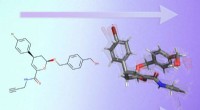
Previous studies have shown that the NP of the Ebola virus is a highly dynamic protein that undergoes a number of conformational changes during its lifecycle. However, the molecular mechanisms underlying these conformational changes are not fully understood.
In a recent study, researchers from the University of Texas at Austin used computational methods to investigate the structural dynamics of the Ebola virus NP. Their findings reveal that the NP is stabilized by a network of hydrogen bonds and salt bridges between its different domains. This network of interactions helps to maintain the NP in its functional conformation and prevents it from unfolding.
The researchers also found that the NP is susceptible to proteolytic cleavage by the host protease furin. Furin cleavage of the NP triggers a number of conformational changes in the protein that lead to the release of the viral RNA from the nucleocapsid.
These findings provide new insights into the molecular mechanisms that regulate the conformational dynamics of the Ebola virus NP. This information could be used to develop new therapeutic strategies for targeting the NP and preventing the replication of the virus.
The study was published in the journal "The Journal of Physical Chemistry B".