Superconductivity under Extreme Pressure:
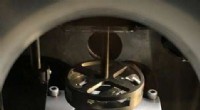
It's important to note that phosphine's superconductivity is observed under extremely high pressure conditions. The reported critical temperature (Tc) of 2.3 K occurs at pressures exceeding 2 million atmospheres. This is far from ambient conditions, requiring sophisticated high-pressure techniques and specialized apparatus.
Pressure-Dependent Behavior:
The superconducting behavior of phosphine is strongly dependent on pressure. As pressure increases, the Tc increases until it reaches a maximum value and then decreases again at even higher pressures. This suggests a complex interplay between the electronic structure, molecular arrangements, and bonding characteristics of phosphine under these extreme conditions.
Microscopic Mechanisms:
The microscopic mechanisms responsible for superconductivity in phosphine are still not fully understood. While conventional BCS (Bardeen-Cooper-Schrieffer) theory provides a framework for understanding conventional superconductivity, it may need to be extended or modified to account for the unique characteristics of phosphine under high pressure.
Complex Phase Diagram:
The phase diagram of phosphine under pressure shows a rich variety of phases, including metallic, superconducting, and insulating phases. Understanding these phases and their transitions requires detailed experimental studies and theoretical modeling to unravel the intricate nature of phosphine's behavior under extreme conditions.
Implications for Other Materials:
While the discovery of superconductivity in phosphine has opened new avenues for research, it may not necessarily translate directly to other materials. Each material has its unique properties and characteristics, which can influence superconducting behavior significantly. Therefore, it's important to study and understand phosphine's properties in isolation to gain fundamental insights into high-pressure superconductivity.
Experimental Challenges:
Experimental challenges arise when studying materials at such extreme pressures. Measuring electrical and thermal properties accurately, controlling sample purity, and dealing with the harsh environment inside pressure cells can be technically demanding and require specialized expertise.
In conclusion, while the observation of superconductivity in phosphine under high pressure is undoubtedly intriguing, it presents a complex and multifaceted phenomenon. Further research is necessary to fully understand the underlying mechanisms, the role of pressure, and the potential implications for other materials. Continued exploration of these extreme conditions and the behavior of matter under such extraordinary circumstances promises to contribute to the advancement of our knowledge in the fascinating realm of superconductivity.