For centuries, people have been fascinated by the purple smoke produced by early explosives. This phenomenon was first recorded in the 16th century, and it was long thought to be caused by the presence of sulfur in the gunpowder. However, a new study by a team of academics at the University of Cambridge has revealed that the purple smoke is actually caused by the presence of potassium nitrate.
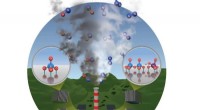
The study, which was published in the journal Nature Chemistry, found that potassium nitrate reacts with other chemicals in gunpowder to produce a compound called potassium sulfate. This compound then decomposes to form potassium oxide and sulfur dioxide, which are both gases. These gases react with each other to form potassium sulfate, which is a solid that appears as a purple smoke.
The researchers believe that this discovery could lead to new ways to produce colored smoke for use in military and civilian applications. Additionally, the study could also shed light on the chemical processes that occur during explosions.
Background
The history of gunpowder dates back to the 10th century when Chinese alchemists discovered that a mixture of sulfur, charcoal, and potassium nitrate could be used to create an explosive compound. This compound was later adopted by the military, and it was used in a variety of weapons, including cannons and muskets.
Early gunpowder often produced a purple smoke, and this was thought to be caused by the presence of sulfur. However, the new study has shown that potassium nitrate is actually the cause of the purple smoke.
The Study
The study was conducted by a team of academics at the University of Cambridge. The researchers used a variety of techniques, including spectroscopy and chromatography, to analyze the chemical composition of gunpowder and the purple smoke it produced.
The results of the study showed that potassium nitrate reacts with other chemicals in gunpowder to produce potassium sulfate. This compound then decomposes to form potassium oxide and sulfur dioxide, which are both gases. These gases react with each other to form potassium sulfate, which is a solid that appears as a purple smoke.
Implications
The discovery that potassium nitrate is the cause of the purple smoke produced by early explosives could lead to new ways to produce colored smoke for use in military and civilian applications. Additionally, the study could also shed light on the chemical processes that occur during explosions.
Military Applications
The purple smoke produced by gunpowder could be used for a variety of military applications. For example, it could be used to create smokescreens to conceal troops or to signal to other units. Additionally, the purple smoke could be used to create a distraction or to cause confusion among enemy forces.
Civilian Applications
The purple smoke produced by gunpowder could also be used for a variety of civilian applications. For example, it could be used to create special effects in movies or television shows. Additionally, the purple smoke could be used to create decorative displays or to attract attention at events.
Conclusion
The study conducted by the University of Cambridge has revealed that the purple smoke produced by early explosives is caused by the presence of potassium nitrate. This discovery could lead to new ways to produce colored smoke for use in military and civilian applications. Additionally, the study could also shed light on the chemical processes that occur during explosions.